
Learn online, gather in person or commit to a year of study
Foundations of Shamanic Training & Inner Shaman Retreat
Learn shamanism online with José Luis Stevens Ph.D., Lena Stevens and Anna Stevens Harrington. Whether you are a beginning student of shamanism or a practitioner seeking to deepen your path, this self-directed 7-session course has it all: teachings, guided visualizations and practices to set you on the shamanic path.
No credit card required. Create your free account and start Session 1, An Introduction to Shamanism, today.
For over 30 years, The Power Path has guided thousands of students in the study of shamanism. José and Lena completed a ten-year apprenticeship with a Huichol shaman in Mexico, and continue to study with Shipibo shamans in the Amazon and Paqos in the Andes.
Multiple Paths To Deepen Your Shamanic Practice
Begin online at your own pace, or experience the teachings in person, then explore your practice during a year long shamanic study program with José, Lena and Anna.
Learn online
Foundations of Shamanic Training
Seven self-paced video sessions with José, Lena and Anna covering shamanic maps, allies, ceremony, healing and more. Start with Session 1 free, no credit card required.
In person
Inner Shaman Retreat
Five days with José Stevens at Eagle Bear Ranch in Northern New Mexico, turning inward for clarity, guidance, healing and direction. Next retreat: June 2027, by application.
A year of study
One Year Shamanic Studies Program
Our most immersive training: a year of practices, ceremonies, time in nature and community. Offered in person in New Mexico, the Southwest and Mexico, or online from anywhere.
What Is a Shaman?
A shaman is a specialist and advanced practitioner of the ancient path of shamanism, practiced the world over. Shamans are trained and initiated by their elders over many years of long apprenticeship to perform a great number of services for their communities. For example, they are the world’s first medical doctors, psychologists, spiritual leaders, men and women of knowledge, ceremonialists, artists, prophets, strategists and storytellers. One of their specialties is journeying to other dimensions to learn and bring back knowledge; another is working with altered states of awareness. Some of them know how to suspend the ordinary laws of physical reality to perform unimaginable feats of skill, such as shapeshifting, healing incurable conditions and the like.
While shamans are trained specialists, anyone may walk the shamanic path and learn to practice shamanic techniques. They can be known as shamanic practitioners, but not shamans, as that title refers to those who have completed long apprenticeships, not a weekend workshop.
Learn more in our article What is Shamanism?
Why learn shamanism?
What our course covers
In this course we cover the distinctions between walking the shamanic path and becoming an initiated shamanic practitioner. We review the main shamanic maps, the value of allies and how to acquire them, and cover altars, ceremonies, pilgrimage places, and locations of power. We explore the power of sound and vibration, sacred singing, and the shamanic understanding of illness and healing, including the use of shamanic tools and the application of shamanism to modern-day life. We touch on superstition and sorcery, mixing shamanic traditions with other modalities, and using shamanic methods for planetary healing.
If you are completely new to shamanic practices, we suggest visiting our What is Shamanism page to learn about this ancient tradition.
Ceremony, Journeying and Working with Allies: What You Will Practice
In the Foundations of Shamanic Training course you will learn and experience how to:
- Create an altar for your own shamanic ceremonies
- Use basic techniques to protect yourself
- Call in allies, guides and power animals
- Experience the value and power of communicating with the elements and elementals
- Work with the Ancient Tree of Life practice and other sacred maps
- Use the medicine wheel and know its many applications
- Apply the triad of Truth, Love and Energy
And so much more.
You will become acquainted with shamanic journeying based on the principles taught by Michael Harner. He was on José Stevens’ doctoral dissertation committee in the early 1980s and taught José many of the methods he learned from the Northwest Coast Salish and the Shipibo in Peru. José, Lena and their daughter Anna went on to apprentice with the Shipibo for over thirty years and still study with them. Their training with the Wixarika people, the paqos of the Andes and numerous other shamanic traditions informs what they teach in the Foundations course and many other courses.

Foundations of Shamanic Training Online Course
An online course series comprised of 7, one-hour sessions. This is the Power Path’s flagship course. If you are a beginning student of shamanism or a practitioner seeking greater understanding and to deepen your knowledge of the shamanic path, this course has it all. It is designed to provide a container not only for information, but also for the set of practices that can set you on a shamanic path or support and deepen any existing practice.
Free offer
Watch Session 1, An Introduction to Shamanism, for free.
No payment required.
Who is this online shamanism course for?
For the beginning student of shamanism and the experienced practitioner seeking greater understanding and to deepen their knowledge of the shamanic path.
“
Foundations in Shamanism helped me to gain a much greater understanding of Shamanism and how to implement Shamanic practices into my daily life. I have found that these simple tips, tools and processes have supported me to live with a greater sense of balance, power and peace during these chaotic times.”
Marisa G.
What Is Shamanic Healing?
The shamanic understanding of illness is misalignment with the environment and with Spirit. This misalignment can be rectified through shamanic practices, both for oneself and for others with their permission. Our understanding of the shamanic way is that all healing is actually self-healing, because in essence all are perfect exactly as they are, and that the greatest healing of all is to see the divine in everyone, no matter what their outward appearance or their complaint may be. This is how we approach shamanic healing training.
There are many techniques to be learned in shamanic healing. Extraction is the process of removing misaligned and inharmonious energies from the system to prevent stagnation and improve circulation. Energy that moves is healing; energy dammed up is illness. Many techniques using feathers, the drum, rattles, songs and so on support this understanding. Soul retrieval (we prefer the term retrieval; the soul is always fine) is good for bringing disparate parts together again to form a whole working system. Trauma, shock and fear can create such divisions, and these must be released. We emphasize developing neutrality over drama, as this is essential to becoming a good healer as well as to healing within.
Session 6 of Foundations of Shamanic Training is devoted to shamanic healing. If you are looking for healing support yourself, see our Shamanic Support services.
“
I really enjoyed the Webinar, ‘Foundations of Shamanism’ last year. It allowed me to come away with a broad sense of Shamanism, from ceremonies to the inner workings of how to stay neutral, store and control our own power, and road to heal ourselves. I’m always ready for more teachings from the Powerpath Team!”
Dan D.
Meet your teachers
Our instructors are experienced shamanic practitioners who bring decades of practice, ceremony, and teaching. Each teacher is deeply connected to their lineage and dedicated to sharing shamanic traditions with respect and integrity.

José Luis Stevens Ph.D.
José Luis Stevens Ph.D. is the president and co-founder (with wife Lena Stevens) of Power Path Seminars and School of Shamanism, an international school and consulting firm dedicated to the study and application of shamanism and indigenous wisdom to business and everyday life. José completed a ten-year apprenticeship with a Wixarika (Huichol) Maracame in the Sierras of Central Mexico and has since studied other Toltec traditions extensively, as well as traditions from the Amazon, the Andes and Europe.

Lena Stevens
Lena is an internationally known teacher and shamanic practitioner. She apprenticed for 10 years with a Wixarika (Huichol) Maracame from Mexico and has studied cross-cultural shamanic healing from numerous traditions including South American, Native American, Northern European and Siberian.

Anna Stevens Harrington
Anna is an internationally known teacher and shamanic practitioner who has spent her life studying and working with indigenous shamanic traditions around the world, including those from Mexico, North and South America, Europe and Asia. In 2005 she produced and directed the critically acclaimed documentary film Woven Songs of the Amazon about the Shipibo woven song tradition.
Our Lineage and the Traditions We Honor
From 1986 through 1996, José and Lena apprenticed for ten years with a high-level Wixarika (Huichol) maracame (shaman) of the Toltec tradition in central Mexico. This life-changing and profound experience altered the direction of our lives and, with his encouragement, led us to study the shamanic tradition of the Shipibo in the Peruvian Amazon, the Q’ero in the Andes of Peru, and many other shamanic traditions around the world, including North American, Sami, Celtic, African, Tibetan Bon and Aboriginal Australian shamanism. Although we have studied Shipibo shamanism for almost forty years, Wixarika is our root and foundation. We celebrate this with annual pilgrimages to the sacred peyote fields of Wirikuta and Cerro Quemado in Mexico. Our greatest interest now is cross-cultural shamanism: the core teachings shared by all these traditions, and their unique differences.
Despite concerns about cultural appropriation, our respected and wise Indigenous teachers have always encouraged us to share and spread their teachings and knowledge, because they themselves often have not had the opportunity to share their knowledge as they wish. They lack the reach and the freedom to travel because of customs restrictions, lack of passports, poverty and the like. They entrusted us with their teachings to be their messengers to distant lands and cultures, and they have been eager to have their ideas translated into terms that are simple and easily assimilated by Westerners and other cultures. We have been fortunate to share their knowledge through books, webinars and lectures throughout the world. In exchange, we founded The Center for Shamanic Education and Exchange (CSEE), which has raised great sums for Indigenous shamanic projects throughout the world and brought shamans to the USA to teach and exchange with other shamanic traditions.
Our colleague, fellow ceremonialist and practitioner Steve Vierra is president of CSEE and deeply involved in its many projects, and Lena is on its advisory board. Anna is on the board of the Society for Shamanic Practitioners (SSP), a nonprofit practitioners’ group, and Lena is on its advisory board as well. After many years on both boards, José has stepped down to focus on writing projects.
Books by José Stevens
Go deeper with José’s books on shamanic practice, prayer and awakening the Inner Shaman.

Awaken the Inner Shaman
Within you is a greater, wiser self that is not bound by fear or perceived limitations: the Inner Shaman. A direct, practical path to the greater spiritual dimensions, and the book our Inner Shaman Retreat is named after.
“Jose Stevens does an incredible job of de-mystifying Shamanic practices and bringing them into our western world, in a way that anyone can understand. This book is easy to read and I would say a must for any spiritual aspirant.”
— Rev. Carol Calvert

Secrets of Shamanism
With Lena Stevens. How shamans journey deep within to tap the universal source of information and wisdom, and the techniques they perfected for communicating with the world of spirit.
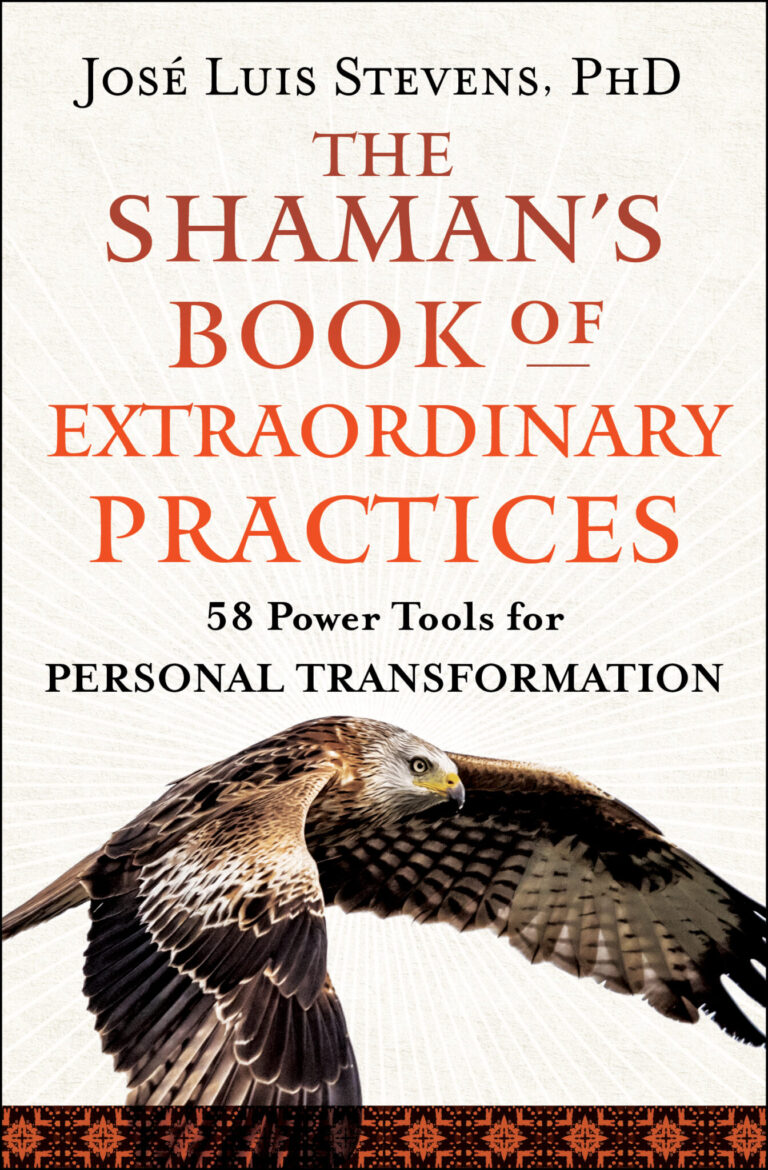
The Shaman’s Book of Extraordinary Practices
Fifty-eight simple but extraordinarily effective shamanic practices for personal transformation, drawn from José’s decades as a practitioner and teacher. Also available as an audiobook.
“This book comes from a lifetime of practical experience and is highly recommended for anyone interested in shamanism and its practical applications.”
— Matthew J. Pallamary

How to Pray the Shaman’s Way
A guide to shamanic prayer and how it can lead to deeper healing, a more grounded outlook and a greater sense of connection with nature and the divine. Foreword by Don José Ruiz.
“I really appreciated the simplicity and usefulness of these prayers, and am inspired to create my own.”
— M. Munoz

Encounters with Power
An entertaining and hair-raising set of true tales from José’s shamanic experiences and misadventures, containing valuable shamanic lessons and warnings of what to avoid.
“If you’ve only time to read one book this year, this is the one!”
— Joyce DeWitt
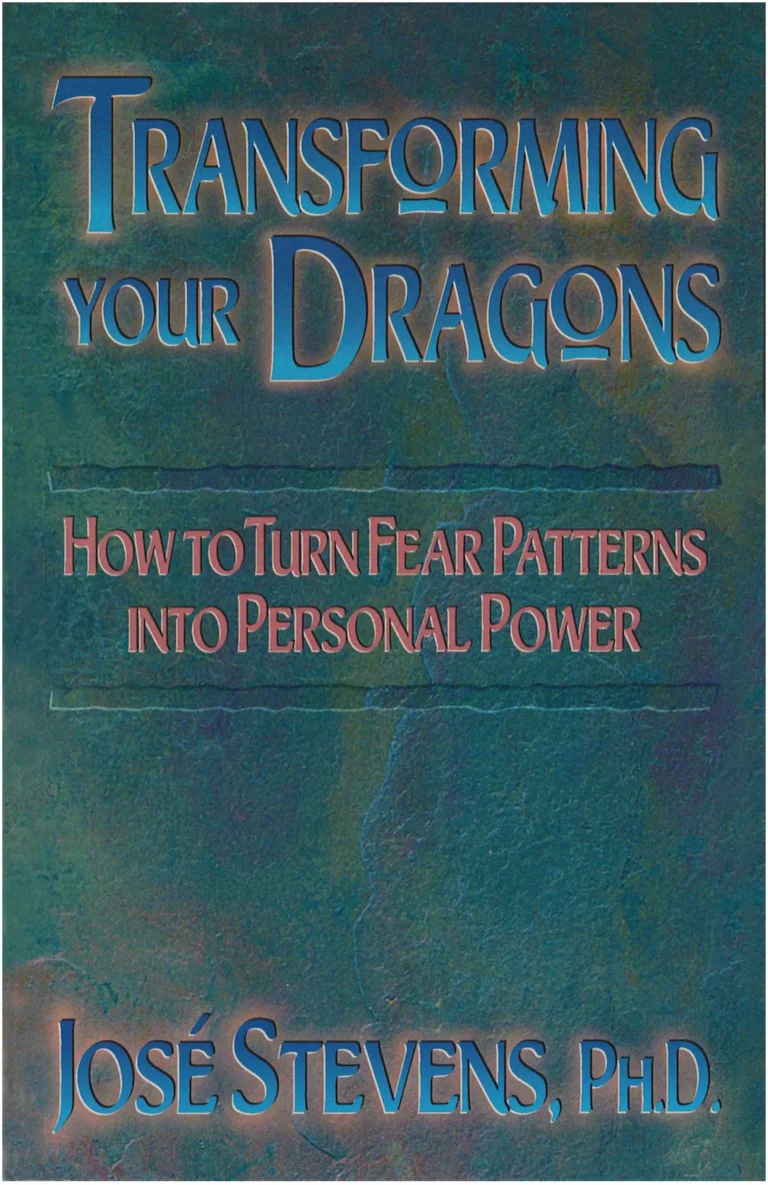
Transforming Your Dragons
A classic guide to the development and characteristics of seven main fear patterns that destroy people’s lives, and how to erase each one.
“A most useful and practical book for both ordinary people and for professional people helpers.”
— Ralph Metzner Ph.D., psychologist and author
Coming in 2027: Power at the Edge. A twenty-five-year project on the shamanic power of edges, boundaries and thresholds, and the basic principles that govern them, such as hyperactivity, opportunity, access to power and, of course, danger. The book covers eight types of edges: natural, artificial, abstract, energetic, time, psychological, spiritual and societal. It also examines the porousness or rigidity of boundary lines and their consequences, and teaches how to work with boundaries for maximum advantage.
“Many of the most important lessons I have learned in life have been taught to me by Jose and Lena Stevens.”
— Scott Carter, former executive producer of Politically Incorrect with Bill Maher
What Students Say About Foundations
“
The Foundations of Shamanism is a course that changed my life and transformed my entire way of thinking. After years of living behind the mask of a people-pleasing personality, I finally shed my exhausted shell and came home to my real self. Jose, Lena and Anna are extraordinary and wonderful teachers. They offer a fascinating depth of knowledge about their subject, as well as a practical application of how to use the principles of Shamanism in one’s daily life.”
Sonika O.
“
The Foundations of Shamanism is one of three online courses I have taken with the Power Path. The course is fun, engaging and brimming with information that is practical and able to be applied to my life immediately. I came away with a better historical and philosophical understanding of shamanism, too, and am grateful that Lena, Anna and Jose are willing to teach others what they have learned from their many years of study and practice.”
Ann P., La Jolla, CA
Foundations of Shamanic Training Online Course
Start with Session 1 free. If you enjoy it, continue with the full course at 20% off, a limited-time offer valid for 7 days.
How to Become a Shaman
Traditionally, a person becomes a shaman in one of three ways. In the first, relatively common way, the person is born into a family with a lineage of shamans and, through their own interest, requests training from an elder shaman relative. In the second, the person survives a deadly illness, is struck by lightning, survives an animal attack or a similar trauma, and this marks them as a good candidate for becoming a shaman. Similarly, a person born with dwarfism, blindness, an intersex body or another physical difference can be seen as a good candidate. In the third, a young person with a great interest in becoming a shaman repeatedly approaches an elder shaman for training. Rebuffed many times but persisting, they may be accepted. Apprenticeships are notoriously arduous, extremely challenging and last for many years, with demanding initiations and tests along the way.
In a typical Indigenous community with an initiated shaman, most members of the community walk the shamanic path by attending ceremonies, practicing shamanic techniques, making offerings and so on, but they are not trained to perform all the duties of a bona fide shaman. Since most lifestyles in mainstream Western culture do not train shamans, it is sometimes difficult and inconvenient to find an Indigenous shaman to train with because of proximity, taboos and other such things. Despite this, thanks to online access and programs such as those The Power Path offers, it is possible to take many classes in shamanism and get excellent training, either to simply walk the shamanic path as a way of life or to become a shamanic practitioner without the official duties or title of “shaman.” Bear in mind that most initiated shamans, when questioned, deny that they are shamans.
Is Shamanism a Religion?
Is shamanism a religion? No, not in our view. It is clearly a spiritual path, but not a religion. There is no hierarchy, dogma, founder or holy text, nor are there commandments. However, we have met many shamans who also practice their traditional religion, such as Buddhism, Catholicism, Hinduism or Taoism. Shamanism is a worldview and a set of valuable, practical tools for living and serving the community.
Frequently Asked Questions
“
I really enjoyed the program foundations of shamanism. I found it extremely clear and rich and helpful and I really recommend it to anyone interested in shamanism.”
Laetitia S., St Barths, French West Indies
Begin your shamanic path today
Start Session 1, An Introduction to Shamanism, free. No credit card required. If it resonates, continue the full 7-session Foundations course at 20% off for 7 days.
In person
Immerse Yourself at the Inner Shaman Retreat at the Beautiful Eagle Bear Ranch in Northern New Mexico
Joining The Power Path staff and diverse, like-minded people at the yearly Inner Shaman Retreat.
The Inner Shaman Retreat is our flagship immersive gathering with José Stevens.
Take the natural next step on your shamanic path.

Inner Shaman Retreat
Coming June, 2027
Getting The Support We Need To Live The Life We Desire
June 10, (2PM)- June 14, (11AM) In person
With Jose Stevens (and contributions from Lena Stevens)
As the known external structures around us begin to fail to support our lives, we need to turn inward and towards the unseen for clarity, guidance, healing, balance and direction.
About Eagle Bear Ranch
A 1,000 acre nature preserve with meadows and forests in Northern New Mexico
Power Path land since 1994, home to our retreats, nature solos and the One Year Program
A 30 foot yurt for group gatherings
Open-air kitchen serving family-style meals, with covered and open-air dining
Glorified camping with a shower house with on-demand hot water
About 2 hours from Santa Fe, 1½ hours from Taos and 2½ hours from Albuquerque


A year of study
Deepen Your Path with the One Year Shamanic Studies Program
Since 2009, the One Year Shamanic Studies Program has been the heart of The Power Path’s teaching: a year of powerful practices, ceremonies, time in nature and other shamanic experiences, learning the shamanic path from ancient to modern and integrating its wisdom fully into daily life. Prior experience with shamanism is not required, and Foundations of Shamanic Training is a natural place to begin.
In person · April 2027 to April 2028
One Year Program in Person
Five gatherings over the year: three at Eagle Bear Ranch in Northern New Mexico, a Four Corners road trip to power spots in the Southwest, and a week at a private beach resort north of Puerto Vallarta, Mexico. Between gatherings you continue with homework, a buddy system and Zoom calls. Enrollment is limited to 26 to 30 students by application, and completing the in-person program is the prerequisite for practitioner training.
Online · January 2027 to January 2028
One Year Program Online
For those who can’t join in person. Each month brings 4 to 5 hours of video teachings with José, Lena and Anna, homework practices and a live Q&A on Zoom, with a buddy system and community group throughout the year. Weekly Wisdoms and Remote Shamanic Healing webinars for 2027 are included. Open to all, no prior experience required. The online program does not lead to practitioner training.
“
The one year program was so much more than advertised. The powerful places that we went to, the personal one on one time, and the experience with a group was a once in a lifetime event! It has opened my eyes and my heart, I will truly never be the same. Thank you Power Path!!!”
Dan, Tulsa, OK
Shamanic Practitioner Training and Certification
To become a Power Path shamanic practitioner there are several steps. The in-person One Year Shamanic Studies Program is the prerequisite. Note that completing it does not automatically qualify someone as a shamanic practitioner: a series of three advanced workshops, each with its own fee, must be completed after the One Year Program. (The online One Year Program does not lead to practitioner training.)
No certificate is granted, just the skills needed to practice on your own as a shamanic practitioner wherever you live. We understand that other shamanic training programs offer shaman certification, but we believe a paper certificate is not of value in the shamanic world; it does not really mean anything. What is of value is your competency and training. You are free to tell anyone that you were trained by The Power Path, and this carries considerable weight, as The Power Path has an excellent reputation.
To become an advanced Power Path practitioner there are further requirements. You must attend the Wixarika Ceremony of Light on November 11 of any year. This qualifies you for the annual pilgrimage to Wirikuta, the sacred peyote fields in Mexico, with an overnight ceremony there and, after one night of rest, a climb up Cerro Quemado for the sunrise. There is a commitment to do this for five years in a row. It is challenging and quite the adventure.
Meet our Power Path shamanic practitioners.
Shamanic Training in New Mexico and Online
Weather permitting, our shamanic training courses are mainly taught at Eagle Bear Ranch in Northern New Mexico, about 2 hours from Santa Fe, twenty-five minutes north of Las Vegas, New Mexico, and approximately two and a half hours from Albuquerque on Interstate 25. If the weather is not permitting, we meet in Santa Fe, New Mexico, at Power Path headquarters. Teaching is either in our 30 foot yurt or in outdoor classrooms.
Our One Year shamanic program includes travel and camping through the Four Corners region, where Arizona, New Mexico, Colorado and Utah all meet. This is the magical red rock land of canyons and mesas, the sacred lands of the Ute and Navajo tribes. Here we teach in spectacular outdoor classrooms.
The One Year program also includes a trip to a beautiful rustic beach resort one hour north of Puerto Vallarta, Mexico, ten miles north of Sayulita, a famous surfing beach and resort town. In this nature reserve, meals are family style and classes are held in a beautiful yoga studio in a cove by the beach. There are fire ceremonies on the beach and an unforgettable but optional whale-watching trip. We also visit a sacred Wixarika pilgrimage site.
We also have many webinars and online courses available worldwide.
Explore All Our Shamanic Courses
Foundations of Shamanic Training is just the beginning. Browse the full range of online shamanic courses and training from The Power Path School of Shamanism.