
One of humanity’s greatest advantages and challenges is our capacity to expect. Our ability to expect allows us to gather data and plan for events so that we can survive. For example, we use our powers of observation to gather data about weather changes. When we sense a sudden, dramatic drop in temperature, winds coming in from the North, rain clouds building in the sky, and animals behaving in tell-tale ways, we expect a strong, perhaps dangerous storm coming in that we should take shelter from. We head indoors, batten down the windows and doors, and so on. If we are at sea, we take similar precautions by either making a run for a safe harbor or taking down the sails, battening down the hatches, and pointing our bow into the storm to meet the waves coming in. If the signs of an economic downturn are presenting themselves then we take precautions by selling off vulnerable investments and take other means to lower our risks of losing everything.
Over millennia we have learned to work with expectations to manage finances, strategize our way forward, gather resources, build defenses, stockpile food, and perhaps go lean and mean to be able to move quickly to meet adversity. Expectations have become one of the most powerful tools in our tool box to survive and thrive in a constantly changing world. However, expectation comes at a cost and sometimes the price is steep, even disastrous. One person or company prepares for disaster but another person senses perhaps through intuition that the disaster will not manifest and instead, expecting a better outcome, they find huge opportunities instead.
Expectation can make us overly cautious or lead us into predictive behaviors that may cloud our vision or creative response to a challenge. The hurricane is coming and millions of people jam the roads to get away and perhaps they are smart to do so. Some people take the risk and stay home and perhaps they lose their lives or perhaps the hurricane changes course and hits elsewhere, right where people were escaping to with disastrous results.
When we have been traumatized early in life by abandonment, violence, sexual assault, or starvation, poverty, and the like, it can scar us for life by cementing expectations that these things will always happen to us. In this way we develop the seven deadly fear patterns of self-destructiveness, greed, self-deprecation, arrogance, martyrdom, impatience and stubbornness. Whole cultures may develop expectations in response to impoverishment, war, invasion, colonization, and many other difficulties. This all creates enormous suffering in the world and creates an endless chain of similar events that result from negative expectations.
Why? Because most of us know that expectations breed more of the same. Science has demonstrated to us that our beliefs and the expectations based on those beliefs actually impact physical reality in ways that repeat our expectations. We can see this clearly in the placebo effect. Of course, the positive side of this is that when we expect positive results from a pill or a medicine, we often get them and it is the same with all aspects of life. If we expect our students to do well, they will. If we expect our students will do poorly because we are holding some prejudices they perform with lower scores.
Expectations often center around our fears. As a species we have been conditioned by fear for hundreds of thousands of years because it is endemic in our cultures, religions, beliefs and mind sets and hardly anyone notices how pervasive fear is and how it is totally accepted and expected. It could be truthfully said that we live in fear day to day, often moment to moment. So, are we rightfully fearful because the world is a totally scary place and horrible things happen if we are not hypervigilant? Or do horrible and scary things happen to us because we are so afraid?
Let’s explore this for a moment. The fact that we believe we are separate objects from one another and from our environment leads quite naturally to having fearful thoughts. We learn that anything we cannot control or manage could harm us. So, we try without success to control everything. The bullet just might find our children. Don’t let them out of our sight. The car might crash into us unexpectedly. Buy the most expensive safest car on the market. We might just be under the tree that gets struck by lightning. Best we cut it down or just never go out. We just don’t know what that other person who looks different from us is thinking. Keep them away. That is how we live. Just take a morning or afternoon and see if you can count the number of fear-based thoughts you have. These fears often take the form of “What if?”. You will probably be horrified how often you contemplate a negative outcome.
Around the world there have always been individuals and small groups who are not afraid of anything. If we question these people, we find that they do not feel separate from their environments or from animals or other people. They feel safe everywhere they go. They are never where the bullet goes, the car crashes, the avalanche falls, or where the tsunami hits. They do not identify with their bodies or their minds. They identify only with universal and infinite awareness. They are one with everything. Who is it that would be afraid? What would they be afraid of? It’s all Spirit. They would say that it is in our nature to be this way. Maybe they used to be afraid and then they found a way not to be. They would say that it is very comfortable and effective to live this way. There is no stress. They don’t think much, rather they find they just know what they need to know. These folks still use the power of expectation when needed, but very frugally. They are mostly in the present moment.
They have personalities, jobs that they go to, a language they speak, friends, spouses, children to raise, and so on, just like other folks. In fact, they show up as very normal but relaxed and content people. They are loving and kind. Some of them are highly accomplished in the world. Yet they don’t see themselves as a separate being. They are one with humanity, one with the world. For them there are no separate objects or things. They say that one day everyone will discover this way of being and that the world will become dramatically transformed in the process, in many ways effortlessly, because it is the natural way to be. What is not natural is to be fearful. That does not mean to be careless or take foolish risks. Life as a human requires discernment, but not fearfulness. We have way too many fear thoughts, 99% of which don’t come about.
Humanity is perched on the edge of an era. The old paradigm of being afraid all the time of everything is done-zo. Humans en masse are sick and tired of it but they don’t know that there is another way to be or they know there is another way but don’t know how to get there. All this knowledge is available now. There are more way-pavers than ever before. The old way has taken us as far as it can. If we continue the path of fear, it is unsustainable and we are done for. But that is not our destiny. It never really was. It has been a painful but educational experiment and we know where it takes us now. There are some who cling to it yet. They are the inexperienced ones who don’t know better. That is not their fault but so it goes. They cannot have their way just like the eight-year-old cannot be allowed to drive the car.
Many people have been waiting for the fear-based approach of the younger ones to fail, to self-destruct and that is happening like a slow-motion train wreck, but perhaps that is not enough. Armed or violent resistance, rebellion, or revolution usually only makes the other side dig in and become stronger. So that is not the way either. So that leaves the path of awakening. Millions must decide that they are no longer willing to be afraid and act accordingly, fearlessly, cooperatively, in a determined way. There must be political and economic consequences for the ones that threaten others. That will turn the tide quickly. Then the building can begin but not rebuilding of the old. The world’s infrastructure has not worked for a long time. Time for whole new fearless ways. What would that look like, feel like? We can and will do it.
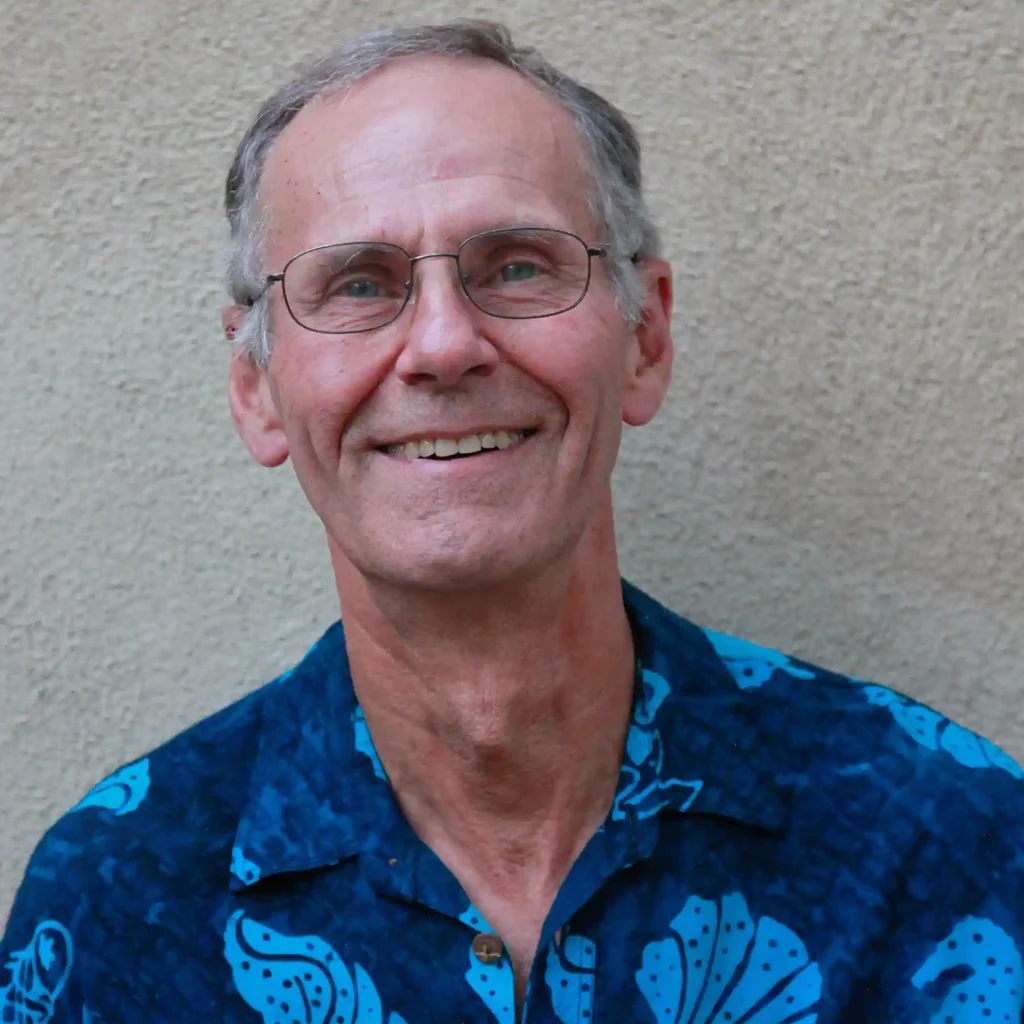
José Stevens
José Luis Stevens, PhD is the president and co-founder (with wife Lena) of Power Path Seminars, an international school and consulting firm dedicated to the study and application of shamanism and indigenous wisdom to business and everyday life. José completed a ten-year apprenticeship with a Huichol (Wixarika) Maracame (Huichol shaman) in the Sierras of Central Mexico. In addition, he is studying with Shipibo shamans in the Peruvian Amazon and with Paqos (shamans) in the Andes in Peru. In 1983 he completed his doctoral dissertation at the California Institute of Integral Studies focusing on the interface between shamanism and western psychological counseling. Since then, he has studied cross-cultural shamanism around the world to distill the core elements of shamanic healing and practice. He is the author of twenty books and numerous articles including Encounters With Power, Awaken The Inner Shaman, The Power Path, Secrets of Shamanism, Transforming Your Dragons and How To Pray The Shaman’s Way.

On Sale






Achieving Your Desires: Manifesting Package
This package is a thorough and comprehensive journey into the study of how to manifest what you want in life. Through discovery and practices you will learn where your obstacles are and how to reframe, reset and develop a strong foundation of personal prosperity in all areas of your life.
Articles & Books by Jose Stevens
José Luis Stevens, PhD is the President and Co-Founder (with wife Lena) of Power Path Seminars, an international school and consulting firm dedicated to the study and application of shamanism and indigenous wisdom to business and everyday life. José completed a ten-year apprenticeship with a Huichol (Wixarika) Maracame (Huichol shaman) in the Sierras of Central Mexico. In addition, he is studying with Shipibo shamans in the Peruvian Amazon and with Paqos (shamans) in the Andes in Peru.